Hindi Barahkhadi (बारहखड़ी) Chart for Kids: 12 Matras and How to Teach Them
In short
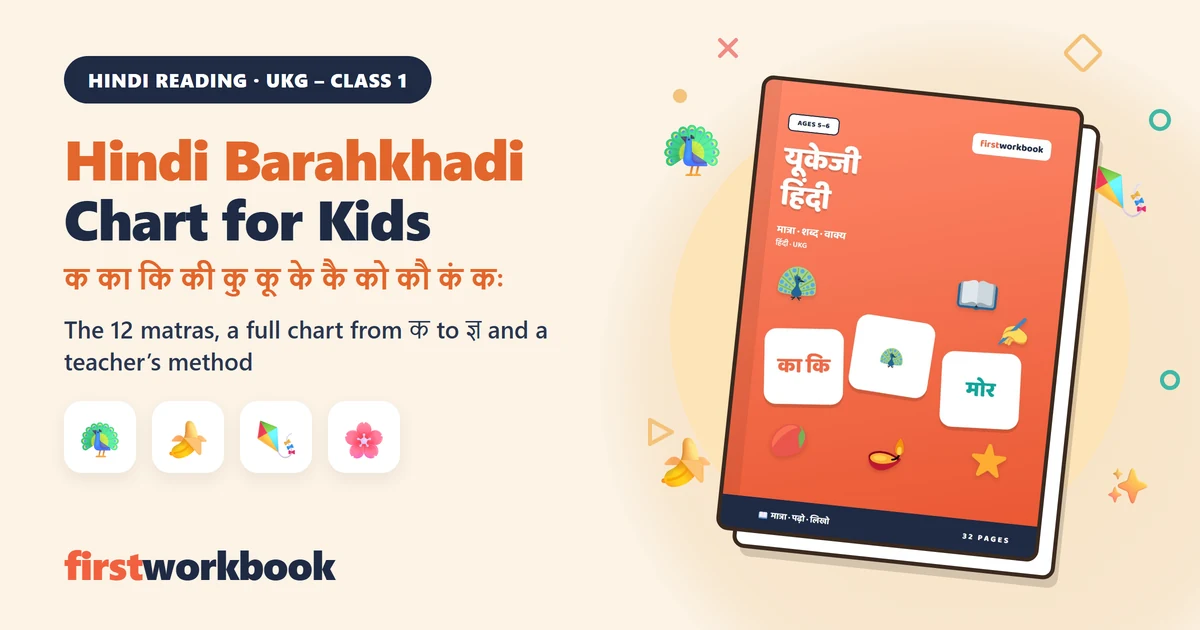
A complete Hindi barahkhadi chart from क to ज्ञ, the 12 matras with names and example words, where each matra goes, a teacher’s method, a 12-week plan and games for UKG and Class 1.
“क का कि की कु कू…” Almost every Indian parent remembers chanting the barahkhadi in a sing-song voice. Many of us can still recite it at speed. Yet children who chant it perfectly often cannot read किताब or मोर when they see the word in a book.
That is because barahkhadi is not a poem to memorise. It is a reading tool: it shows a child how every Hindi consonant changes its sound when a matra is added. In this guide you will find what barahkhadi is, the 12 matras with their names and example words, a complete barahkhadi chart from क to ज्ञ, a teacher’s step-by-step method, a 12-week plan, games, the mistakes almost every child makes, and a Hindi summary for grandparents and family.
What Is Barahkhadi (बारहखड़ी)?
Barahkhadi (also spelled barakhadi or barah khadi) is the chart that joins each Hindi consonant (व्यंजन) with the vowel signs (मात्राएँ). The name comes from बारह, “twelve”: each consonant is shown in twelve forms, one for each of the twelve vowel sounds अ, आ, इ, ई, उ, ऊ, ए, ऐ, ओ, औ, अं and अः.
So the क row reads: क का कि की कु कू के कै को कौ कं कः. The ख row follows the same pattern: ख खा खि खी खु खू खे खै खो खौ खं खः, and so on for every consonant.
A vowel sign is simply another form of the vowel. आ written on its own is a swar; when it joins a consonant it becomes the sign ा, as in का. Once a child understands this one idea, the whole chart makes sense, and they can read thousands of words.
What about ऋ (ृ)? The sign ृ, as in कृ (कृपा, गृह), is not one of the traditional twelve. Teach it separately once the twelve are secure, together with chandrabindu ँ (as in चाँद).
When Is a Child Ready for Barahkhadi?
Most children start barahkhadi in UKG (age 5–6), and finish it in Class 1. The NIPUN Bharat goals for Class 1 expect children to read simple words with familiar matras and short sentences, so the chart is part of that year’s core reading.
Before you start, check three things:
- Swar and vyanjan: your child recognises the vowels अ to अः and most consonants क to ह, by sight and by sound. If not, start with our Hindi varnamala guide.
- Bina matra words: they can read two- and three-letter words without matras, like जल, घर and कमल. These are covered in our guide to bina matra wale shabd.
- Listening: they can hear the difference between a short and a long sound when you say दिन and दीन, or कुल and कूल.
The 12 Matras: Names, Signs and Example Words
| Swar | Matra sign | Common name | With क | Example words |
|---|---|---|---|---|
| अ | (none) | अ – no matra | क | कमल, घर, जल |
| आ | ा | आ की मात्रा (डंडा) | का | नाक, आम, बादल |
| इ | ि | छोटी इ की मात्रा | कि | दिन, किताब, तितली |
| ई | ी | बड़ी ई की मात्रा | की | खीर, तीर, मछली |
| उ | ु | छोटे उ की मात्रा | कु | पुल, मुकुट, गुलाब |
| ऊ | ू | बड़े ऊ की मात्रा | कू | फूल, झूला, सूरज |
| ए | े | ए की मात्रा (एक मात्रा) | के | केला, सेब, रेल |
| ऐ | ै | ऐ की मात्रा (दो मात्राएँ) | कै | पैर, बैल, थैला |
| ओ | ो | ओ की मात्रा | को | मोर, तोता, घोड़ा |
| औ | ौ | औ की मात्रा | कौ | कौआ, मौसम, चौराहा |
| अं | ं | अनुस्वार (बिंदी) | कं | पतंग, रंग, बंदर |
| अः | ः | विसर्ग | कः | दुःख, प्रातः, अतः |
Visarga (ः) appears in very few everyday words, so in UKG it is enough for a child to recognise it. The other eleven are used all the time.
Where Does Each Matra Go? The Rule Children Get Wrong
Matras sit in four different places around the consonant, and one of them breaks the “write in the order you hear” logic. Teach the positions in this way:
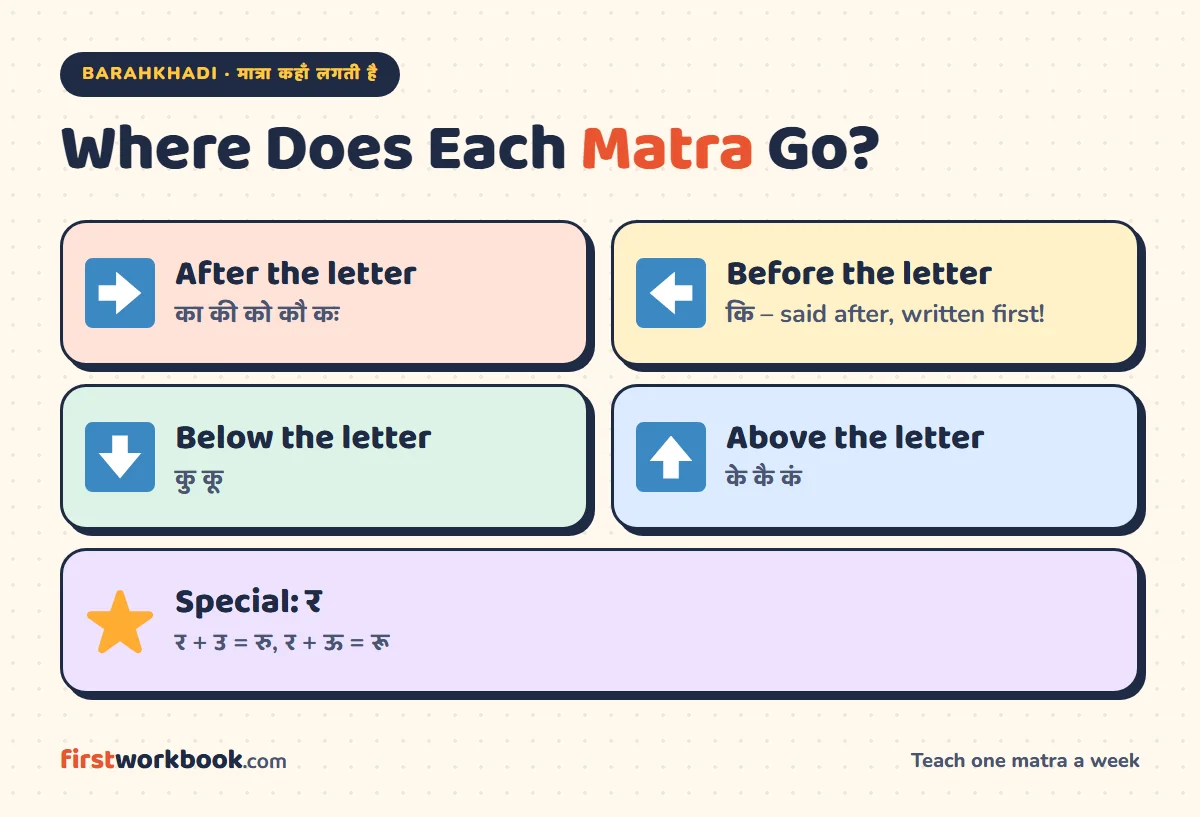
- After the letter: ा (का), ी (की), ो (को), ौ (कौ), ः (कः).
- Before the letter: ि (कि). It is said after क but written before it. This is the single most common barahkhadi mistake, so give it extra time.
- Below the letter: ु (कु), ू (कू).
- Above the letter: े (के), ै (कै), ं (कं).
Watch out for र: with उ and ऊ it does not take the usual signs below. It becomes रु (as in रुपया) and रू (as in रूमाल). Point this out as a “special letter” so it does not confuse your child when they meet it.
Complete Hindi Barahkhadi Chart (क to ज्ञ)
Here is the full chart. Read it across to see one consonant with all twelve matras, and down to practise one matra with every consonant. Most charts leave out ङ and ञ, because they rarely take matras, so we have too.
| अ | आ | इ | ई | उ | ऊ | ए | ऐ | ओ | औ | अं | अः |
|---|---|---|---|---|---|---|---|---|---|---|---|
| क | का | कि | की | कु | कू | के | कै | को | कौ | कं | कः |
| ख | खा | खि | खी | खु | खू | खे | खै | खो | खौ | खं | खः |
| ग | गा | गि | गी | गु | गू | गे | गै | गो | गौ | गं | गः |
| घ | घा | घि | घी | घु | घू | घे | घै | घो | घौ | घं | घः |
| च | चा | चि | ची | चु | चू | चे | चै | चो | चौ | चं | चः |
| छ | छा | छि | छी | छु | छू | छे | छै | छो | छौ | छं | छः |
| ज | जा | जि | जी | जु | जू | जे | जै | जो | जौ | जं | जः |
| झ | झा | झि | झी | झु | झू | झे | झै | झो | झौ | झं | झः |
| ट | टा | टि | टी | टु | टू | टे | टै | टो | टौ | टं | टः |
| ठ | ठा | ठि | ठी | ठु | ठू | ठे | ठै | ठो | ठौ | ठं | ठः |
| ड | डा | डि | डी | डु | डू | डे | डै | डो | डौ | डं | डः |
| ढ | ढा | ढि | ढी | ढु | ढू | ढे | ढै | ढो | ढौ | ढं | ढः |
| ण | णा | णि | णी | णु | णू | णे | णै | णो | णौ | णं | णः |
| त | ता | ति | ती | तु | तू | ते | तै | तो | तौ | तं | तः |
| थ | था | थि | थी | थु | थू | थे | थै | थो | थौ | थं | थः |
| द | दा | दि | दी | दु | दू | दे | दै | दो | दौ | दं | दः |
| ध | धा | धि | धी | धु | धू | धे | धै | धो | धौ | धं | धः |
| न | ना | नि | नी | नु | नू | ने | नै | नो | नौ | नं | नः |
| प | पा | पि | पी | पु | पू | पे | पै | पो | पौ | पं | पः |
| फ | फा | फि | फी | फु | फू | फे | फै | फो | फौ | फं | फः |
| ब | बा | बि | बी | बु | बू | बे | बै | बो | बौ | बं | बः |
| भ | भा | भि | भी | भु | भू | भे | भै | भो | भौ | भं | भः |
| म | मा | मि | मी | मु | मू | मे | मै | मो | मौ | मं | मः |
| य | या | यि | यी | यु | यू | ये | यै | यो | यौ | यं | यः |
| र | रा | रि | री | रु | रू | रे | रै | रो | रौ | रं | रः |
| ल | ला | लि | ली | लु | लू | ले | लै | लो | लौ | लं | लः |
| व | वा | वि | वी | वु | वू | वे | वै | वो | वौ | वं | वः |
| श | शा | शि | शी | शु | शू | शे | शै | शो | शौ | शं | शः |
| ष | षा | षि | षी | षु | षू | षे | षै | षो | षौ | षं | षः |
| स | सा | सि | सी | सु | सू | से | सै | सो | सौ | सं | सः |
| ह | हा | हि | ही | हु | हू | हे | है | हो | हौ | हं | हः |
| क्ष | क्षा | क्षि | क्षी | क्षु | क्षू | क्षे | क्षै | क्षो | क्षौ | क्षं | क्षः |
| त्र | त्रा | त्रि | त्री | त्रु | त्रू | त्रे | त्रै | त्रो | त्रौ | त्रं | त्रः |
| ज्ञ | ज्ञा | ज्ञि | ज्ञी | ज्ञु | ज्ञू | ज्ञे | ज्ञै | ज्ञो | ज्ञौ | ज्ञं | ज्ञः |
Tip: do not ask your child to learn this chart by heart. Use it as a reference, and practise one column (one matra) at a time, as explained below.
How to Teach Barahkhadi: A Teacher’s Step-by-Step Method
Step 1: Teach it matra by matra, not row by row
Chanting क to कः, then ख to खः, trains the voice but not the eyes. Instead, take one matra a week and use it with many consonants: का, खा, गा, जा, मा, ना, पा. Now the child must look at the consonant and the matra to read each one.
Step 2: Sound first, sign second
Before showing the sign, play with the sound. Stretch it: “का…ला”, “आ…म”. Ask your child to spot it: “Do you hear a long ‘aa’ in नाक? In नल?” When the ear knows the sound, the sign has something to attach to.
Step 3: Show the sign and give it a name
Write the matra large and give it a friendly name your child will remember: ा is the “standing stick”, ि is the “stick that goes first with a cap”, ु is the “little hook below”, े is the “single flag on top”, ै is “two flags”. Then write it on 5–6 consonants together.
Step 4: Read two- and three-letter words
Move to real words straight away. For ा: नाक, काम, राजा, बाजा, माला. For ि: दिन, तिल, गिन, किताब. Picture cards help the meaning stick. A child who reads “माला” and sees the garland has done real reading.
Step 5: Pair the short and long sounds
Teach ि and ी together, and ु and ू together, as pairs: दिन/दीन, कि/की, कुल/कूल. Ask: “Is this the short one or the long one?” Short and long confusion is the second most common mistake, and pairs fix it best.
Step 6: Write it, letter first
For writing, teach your child to write the consonant first, then add the matra, and draw the top line (शिरोरेखा) last. With ि this means: write क, add the ि stick in front, then join the line. Our post on Hindi matra worksheets has more writing practice ideas.
Step 7: Read sentences and short stories
After 3–4 matras, put them into sentences: राजा का घोड़ा। मोर नाच रहा है। सीता केला खा रही है। Reading for meaning is the goal of the whole chart, so start as early as you can.
A 12-Week Barahkhadi Plan for Home
| Week | Matra | Practice words |
|---|---|---|
| 1 | ा | नाक, आम, काला, राजा, माला |
| 2–3 | ि and ी | दिन, तितली, खीर, तीर, मीठा |
| 4–5 | ु and ू | पुल, मुकुट, फूल, झूला, सूरज |
| 6 | े | केला, सेब, रेल, पेड़, देश |
| 7 | ै | पैर, बैल, थैला, मैना, कैसा |
| 8 | ो | मोर, तोता, घोड़ा, सोना, गोल |
| 9 | ौ | कौआ, मौसम, चौका, नौ, सौ |
| 10 | ं (and ँ) | पतंग, रंग, बंदर, चाँद, आँख |
| 11 | ः, रु/रू, ृ | दुःख, रुपया, रूमाल, कृपा |
| 12 | All mixed | Mixed word cards, sentences, a short story |
Ten to fifteen minutes a day is enough. Each week, revise the earlier matras for a few minutes before starting the new one. If a matra is still shaky, take two weeks over it. Going slowly here saves months of confusion later.
6 Barahkhadi Games Children Enjoy
- Matra dice: write six matras on a paper dice. Show a consonant card, roll the dice and read the new sound: क + ो = को.
- Matra hunt: give your child a newspaper headline or a story page and a colour pencil. Circle every ी you can find.
- Missing matra: write words with the matra left out (म_र, त_ता) beside a picture. Your child adds the matra.
- Short or long: say a word aloud. Your child holds up one finger for a short matra (ि, ु) and two for a long one (ी, ू).
- Word ladder: change only the matra: कल → काल → किल → कील → कुल → कूल. Which ones are real words?
- Matra bingo: each player has a grid of syllables (मा, मि, मी, मु…). Call one out; the first to cover a row wins.
Common Mistakes (and How to Fix Them)
- Writing ि after the letter (कि written as क + ि on the right). Say the rule every time: “छोटी इ पहले लिखते हैं, बाद में बोलते हैं।”
- Mixing short and long matras (दिन and दीन). Practise them as pairs and use the finger game above.
- Chanting without reading. If your child can recite the chart but not read words, stop the chanting and switch to column practice and word cards.
- Confusing े and ै, or ो and ौ. Teach them a week apart, and use pairs like मेल/मैल only after both are secure.
- Drawing the शिरोरेखा first. The top line goes last; otherwise the matras above the letter get squashed.
- Skipping the exceptions. रु, रू and ृ look “wrong” to a child who has not been told about them.
Free Hindi Worksheets and Workbooks
Before barahkhadi, make sure every consonant is secure with our free Hindi worksheets, which include letter tracing and “find the letter” pages for each swar and vyanjan.
For step-by-step matra and barahkhadi practice, these workbooks follow the same order as this guide:
- LKG Hindi Workbook: vyanjan and bina matra words, the groundwork for barahkhadi.
- UKG Hindi Workbook: Matra Gyan: every matra from ा to ं plus ृ and ँ, picture words, रु/रू, barahkhadi, matra games, reading lists, sentences and a short story.
- Hindi Sanyukt Akshar Worksheets (Class 1–2): the next step after barahkhadi: joined letters (sanyukt akshar).
- Hindi Vakya Gyan: making and reading sentences.
For a wider plan, see how to teach Hindi to kids at home.
हिंदी में सार (Summary in Hindi)
बारहखड़ी वह तालिका है जिसमें हर व्यंजन के साथ बारह मात्राएँ जोड़कर दिखाई जाती हैं: क का कि की कु कू के कै को कौ कं कः। “बारह” यानी बारह स्वर-रूप। मात्रा असल में स्वर का ही दूसरा रूप है: आ अकेला लिखें तो स्वर, व्यंजन के साथ लगे तो “ा” मात्रा।
ज़्यादातर बच्चे UKG (5–6 साल) में बारहखड़ी शुरू करते हैं। शुरू करने से पहले बच्चे को स्वर, व्यंजन और बिना मात्रा वाले शब्द (जल, घर, कमल) अच्छी तरह आने चाहिए।
सबसे ज़रूरी बात: बारहखड़ी रटवाएँ नहीं। पंक्ति-दर-पंक्ति (क से कः) गाने की बजाय हर हफ़्ते एक मात्रा लें और उसे कई व्यंजनों के साथ पढ़ाएँ (का, खा, गा, मा, ना), फिर तुरंत असली शब्द पढ़वाएँ (नाक, माला, राजा)। छोटी इ (ि) और बड़ी ई (ी), छोटा उ (ु) और बड़ा ऊ (ू) जोड़ियों में सिखाएँ। याद दिलाएँ कि छोटी इ की मात्रा अक्षर से पहले लिखी जाती है, और र के साथ उ-ऊ की मात्रा “रु, रू” बनती है। रोज़ 10–15 मिनट का अभ्यास काफ़ी है।
Frequently Asked Questions
Why is it called barahkhadi?
“Barah” (बारह) means twelve. Each consonant is written in twelve forms, one for each vowel sound from अ to अः, so the chart is called barahkhadi.
What are the 12 matras in Hindi?
The twelve forms are अ (no sign), ा, ि, ी, ु, ू, े, ै, ो, ौ, ं and ः. Many teachers also teach ृ and ँ alongside them.
At what age should a child learn barahkhadi?
Usually at 5–6 years, in UKG, after the child knows the varnamala and can read simple words without matras. Most children are reading matra words confidently by the end of Class 1.
Should my child memorise the barahkhadi chart?
Reciting it is harmless, but it is not the goal. A child who can read नाक, किताब and मोर on sight has learnt barahkhadi, whether or not they can recite the chart.
Which matra is the hardest for children?
Choti i (ि), because it is written before the letter but spoken after it, and the short/long pairs ि–ी and ु–ू, which sound alike to young ears.
Research Behind This Guide
- Ministry of Education, Government of India, NIPUN Bharat guidelines: foundational literacy goals for Balvatika and Class 1.
- NCERT, National Curriculum Framework for Foundational Stage (2022).
- School Curriculum and Standards Authority, Western Australia, Hindi curriculum, Year 2: matras as another form of the long and short vowels.
- EuroKids, Hindi Barakhadi Chart for Kids: matra positions and age guidance.
Free Worksheets to Practise This
Printable A4 PDFs, free to download. Pick a set and print it at home or school.
About the author

Er. Deepak Maurya
Founder, FirstWorkbook
Er. Deepak Maurya founded FirstWorkbook in Varanasi to make activity workbooks that children enjoy. A web developer with 8 years of experience, he writes practical guides for parents on learning at home, and plans the activities in our workbooks together with pre-primary teachers.
Spotted a mistake or have a question? Write to us and we'll correct it.