40 Screen-Free Activities for Kids at Home: A Practical Guide for Indian Parents
⚡ In short
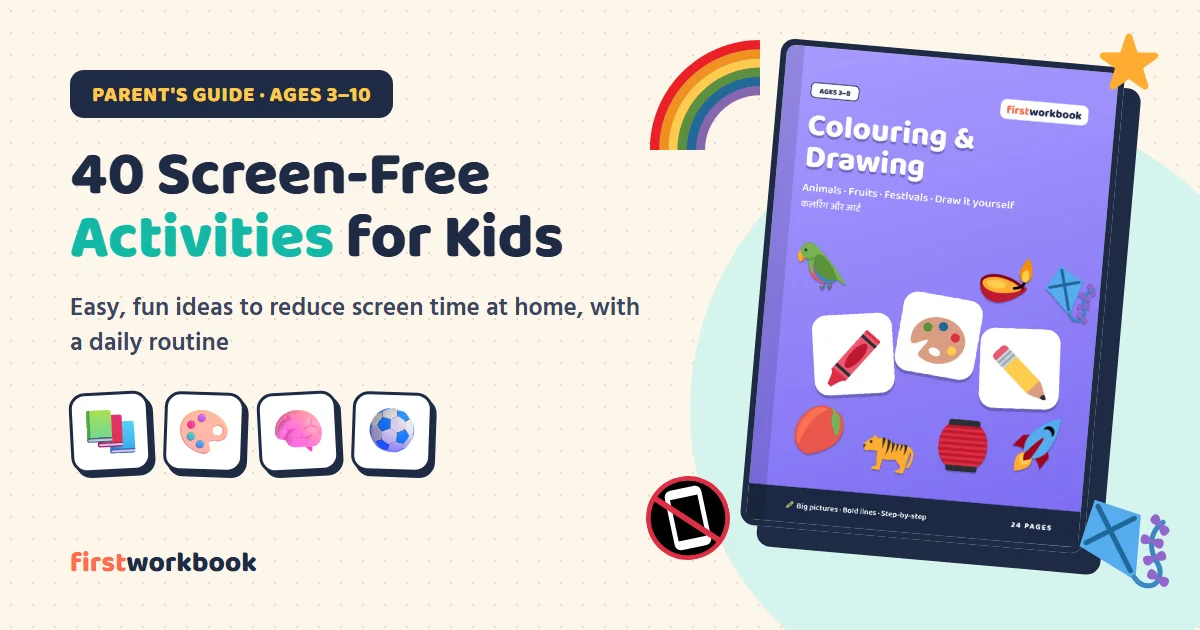
Reduce screen time with 40 easy screen-free activities for kids aged 3 to 10. Includes expert screen time limits, a daily routine and tips to handle tantrums.
"Bas paanch minute aur, Mumma!" If you hear this every time you take the phone away, you are not alone. Phones, tablets and TV have become the easiest way to keep children busy, especially in busy homes. But too much screen time can affect sleep, attention, language, behaviour and physical activity.
The answer is not to ban screens overnight. It is to replace screen time with activities that are just as engaging. In this guide, you will find what experts recommend, 40 screen-free activities for kids sorted by type and age, a sample daily routine, and practical tips to make the switch without daily fights.
How Much Screen Time Is Okay for Kids?
The Indian Academy of Pediatrics (IAP) published guidelines on screen time and digital wellness for children. In simple terms:
| Age | IAP recommendation |
|---|---|
| Under 2 years | No screen exposure (occasional video calls with family are an exception) |
| 2 to 5 years | Maximum 1 hour a day, supervised by an adult, and less is better |
| 5 years and above | Limited, purposeful use that does not replace sleep, outdoor play, family time, study or skill-building |
The World Health Organization gives similar advice for young children. Experts also suggest keeping meals and the hour before bedtime screen-free.
The key idea is simple: screens should not take away time from the things children need most, like sleep, movement, play, conversation and hands-on learning.
Why Screen-Free Time Matters
Better Attention and Focus
Fast-moving videos train the brain to expect constant change. Slow, hands-on activities like puzzles and colouring build the patience and focus children need in school.
Stronger Language Skills
Children learn language best through real conversation, stories and play with people, not from passive watching.
Healthier Sleep
Screen use close to bedtime can make it harder for children to fall asleep. A calm, screen-free evening routine often improves sleep quality.
Better Hand Skills
Swiping and tapping do not build the hand strength needed for writing. Drawing, cutting and building do. Read more in our guide to fine motor skills activities for preschoolers.
Happier Family Time
Screen-free activities are often shared activities. They create time to talk, laugh and connect.
40 Screen-Free Activities for Kids at Home
Creative and Art Activities
- Colouring books with big, bold pictures for younger kids and detailed scenes for older ones.
- Draw-it-yourself lessons where children copy a drawing step by step.
- Rangoli with chalk or coloured rice, especially around festivals.
- Clay modelling: animals, fruits, rotis and tiny utensils.
- Paper craft: masks, puppets, paper boats and fans.
- Cut and paste collage from old magazines and newspapers.
- Finger and sponge painting for 3 to 5-year-olds.
- Make a greeting card for a grandparent, cousin or friend.
Learning and Brain Activities
- Tracing and writing workbooks for letters, numbers and Hindi.
- Puzzles and jigsaws that match your child's age.
- Mazes, sudoku and spot-the-difference for ages 6 and above.
- Odd one out and pattern games to build logical thinking.
- Times tables challenges with a family scoreboard.
- GK quiz night with simple questions about India, animals and space.
- Word building with letter cards in English or Hindi.
- Shape hunt: find circles, squares and triangles around the house.
Reading and Language Activities
- Read-aloud time with a picture book every night.
- Story chain: each person adds one sentence to a story.
- Rhyme time: sing English and Hindi rhymes together.
- Make your own storybook by folding paper and drawing pictures.
- Library corner: a cosy reading spot with cushions and books.
- Newspaper hunt: find five words starting with a given letter.
Active Indoor and Outdoor Play
- Hopscotch (stapu) with chalk on the floor or balcony.
- Musical chairs or freeze dance with family.
- Simon Says for listening skills.
- Treasure hunt with picture or word clues.
- Balloon volleyball indoors.
- Cycling, skipping or playing in the park.
- Traditional games like gilli-danda, kho-kho, pithoo or lattoo.
- Yoga for kids: animal poses like cat, cobra and tree.
Life Skills and Helping Activities
- Kitchen helper: washing vegetables, rolling rotis, setting the table.
- Plant care: water plants and grow methi or dhaniya in a small pot.
- Sorting laundry by colour or by family member.
- Pack your own school bag using a checklist.
- Pretend shop with real coins to practise counting money.
Calm-Down and Quiet Activities
- Board games like ludo, snakes and ladders, and carrom.
- Building blocks or LEGO projects.
- Bead stringing to make bracelets for family members.
- Gratitude journal: draw or write one good thing about the day.
- Stargazing or cloud watching from the terrace or balcony.
Activities by Age Group
Ages 3 to 5
Focus on hands-on play: clay, colouring, finger painting, bead stringing, rhymes, picture books, blocks and simple tracing. Keep each activity to 10 to 15 minutes.
Ages 5 to 7
Add workbooks, simple puzzles, cut-and-paste crafts, reading together, board games and basic maths games. Children this age enjoy completing a page and getting a sticker.
Ages 7 to 10
Offer brain teasers, sudoku, GK quizzes, times tables challenges, cursive practice, longer craft projects, chapter books and outdoor sports. Let them choose and plan some activities themselves.
A Sample Screen-Free Daily Routine (School Day)
| Time | Activity |
|---|---|
| After school | Snack and free play (no screens) |
| 4:30 pm | Outdoor play or active game (45 min) |
| 5:30 pm | Homework and one workbook page (20–30 min) |
| 6:30 pm | Creative time: colouring, craft or building |
| 7:30 pm | Family dinner, no phones at the table |
| 8:15 pm | Read-aloud story and gratitude journal |
| 8:45 pm | Lights off, screen-free bedtime |
Any small, planned screen time can sit in the afternoon, far from meals and bedtime.
How to Reduce Screen Time Without Daily Fights
Replace, Don't Just Remove
Taking the phone away leaves an empty space. Fill it with something interesting. Keep an "activity box" with colouring books, puzzles and craft supplies ready to go.
Make a Family Screen Plan
Write simple rules together: when screens are allowed, for how long, and where (for example, never in the bedroom). Children follow rules better when they help make them.
Use Visual Timers
A kitchen timer or sand timer makes "time's up" feel fair and predictable instead of sudden.
Model the Habit
Children copy what they see. Put your own phone away during meals, play time and bedtime stories.
Give a Warning Before Stopping
"Five more minutes, then we will go play outside" works much better than switching off a screen mid-video.
Expect Some Boredom
Boredom is not a problem. It is where creativity starts. After a few days, most children start finding their own activities.
Celebrate Screen-Free Wins
Use a weekly chart. Each screen-free afternoon earns a star; a full week earns a small family treat like a park trip.
Frequently Asked Questions
How much screen time is okay for a 3-year-old?
According to the Indian Academy of Pediatrics, children aged 2 to 5 should have a maximum of 1 hour a day of supervised screen time, and less is better.
What can I give my child instead of a mobile phone?
Offer colouring books, activity workbooks, clay, puzzles, building blocks, picture books and simple household tasks. Keep them easy to reach so they are as convenient as a phone.
How do I stop my child's tantrums when I take away the phone?
Give a clear warning before time is up, use a timer, offer a fun next activity, and stay calm and consistent. Tantrums usually reduce within one to two weeks when rules stay the same every day.
Are educational apps also counted as screen time?
Yes. Educational apps can be useful, but they still count towards daily screen time. Hands-on activities are better for handwriting, fine motor skills and focus.
What are good screen-free activities while travelling?
Pack a small travel kit with a colouring book, a sticker book, a mini puzzle book, crayons and a picture book. Games like "I spy" and word chains need no materials at all.
Conclusion
Cutting down screen time is not about saying "no" all day. It is about giving children better things to say "yes" to. With these screen-free activities for kids, a simple routine and a little patience, your home can become a place where children create, read, play and learn with their own hands.
Start with one screen-free hour today. Next week, add one more.
Need ready-made screen-free fun? Try our Mega Colouring & Drawing Book for creative time, the Brain Teasers & Logic Book for ages 6 to 10, the Cut, Glue & Craft Activity Book for hands-on projects, and the Stories & Rhymes Reader for bedtime reading.